A guy can easily quote passages from Cervantes’ Don Quijote and works using Shakespeare. Like many different residents of Gibraltar, he reads, speaks, and enjoys both Spanish and English. However, his real passion is the work of Spanish poet Federico García Lorca, which he reads out to high school kids on both sides of the border, keeping Spain apart from the British remote places territory.
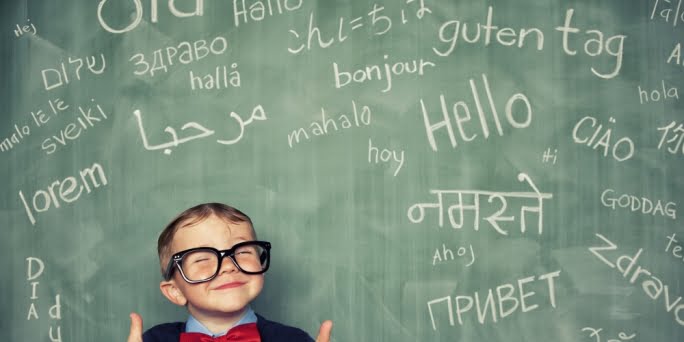
Children in Gibraltar are dropping their interest in Spanish, and “Facebook is responsible,” says Guy, noting that children no longer spend as much time gambling on the streets as they used to. “Children haven’t been using Spanish for a long time now,” confirms Olivero, the retired owner of a bar on Casemates Square.
My mother says she thinks in Spanish. However, I suppose in English
Jade Romero, 17
Spanish by no means disappeared from Gibraltar. It remained the principal language on the streets even after the territory was captured with the aid of Anglo-Dutch forces and ceded to Britain in 1713. The financial system flourished, and those who noticed it was a hazard to make their fortunes – Genoese, Maltese, Jewish, and Spanish marketers – agreed that verbal exchange could be easier for anybody in Spanish.
“If the Gibraltar Chronicle, the newspaper of report, had a circulation of 500 in 1890, El Calpense and El Anunciador, its direct competition in Spanish, offered with the aid of the thousands,” explains Lionel Cipollina, a linguist and the outgoing president of the Cross-Frontier Group, a collective of enterprise and exchange unions from both aspects of the border.
Cipollina is one of the first humans to have sounded the alarm about the reality that young Gibraltarians are using Spanish much less and less in recent times. He also notes that when each affront to Gibraltar’s sovereignty—the distant places territory and the encompassing waters are the problem of an ongoing dispute between British and Spanish authorities—there is a local response favoring English over Spanish.
This is a language that is a part of Gibraltar’s identification
Pie Sánchez, Spanish instructor
“The language has become politicized. Many politicians see it as a terrible factor for Spanish to be misplaced. Still, they dare not launch regulations that might be visible as opposing English,” he provides. “Gibraltar desires to keep being bilingual; however, even supposing the political will is there, we’re coming overdue to this hassle.”Jade, Ashlyn, and other girls at Gibraltar’s Westside School say their grandparents chide them for speaking to them in English. “My grandmother asks me to speak to her in Spanish, so the language didn’t wander off; howdidn’tg ourselves; however,inually talk in English,” says Jade Romero, 17. “My mother says she thinks in Spanish, but I assume in English.”Pie Sánchez, a native of Gibraltar and head of the Spanish department at Westside School, blames the loss of Spanish on satellite TV and social media. “People used to watch [Spanish TV channels] Canal Sur or La 1. It will be Pipi Calzaslargas constantly, now not Pippi Longstocking, and La abeja Maya, no longer Maya the Bee. But Instagram, Twitter, and Facebook use the English variations.”Students in Gibraltar take hours per week of Spanish from a long time of 12 to 16. This has been accelerated in other degrees of obligatory training. “The authorities have found out that Spanish is being spoken infrequently and poorly,” says Sánchez. “Yet that language is part of Gibraltar’s identity.”
So, what precisely can we offer, given the position of fashions, to ensure our child is well-guided in learning additional languages?
Moving on, right here are tips to enhance your infant’s second language:
Tip # 1 – Introduce Second Language at an early age
The earlier you assist your infant’s language learning, the better. Young children between the ages of three and four normally begin to develop their vocabularies during these tiers. The development of a second language at this age will likely be much less hard because they can easily adapt to both languages.
Children gather phrases and sounds from their mother and father. This direct speech and word connection allows younger kids to understand and connect the words to specific gadgets and things, whether they are naming things in conversation or simply creating sounds that resemble matters.
Tip # 2 – Give identical opportunities to each language
Young children at risk of experiencing various languages need the time to discover them concurrently, meaning equal supply traits. Whether your child is experiencing this at home, childcare, or school, they want them to understand that connections can be more powerful than the reviews they have.
Each baby’s improvement will range from one getting to know to another, so it’s critical to support them in this process. Other educational facilities provide classes to assist kids in increasing language demonstration, accordingly assisting them in each language.
Tip # 3 – Help put together a guide for your infant’s (language) training
Create an academic pathway that would help your baby learn a second language. Provide interactive laughs, domestic language video games, and home vocabulary surroundings that make learning smooth and inviting for your infant. Parents can introduce both online and hands-on learning to maximize studying. This will ensure the stability of learning to resource baby in connecting the language relationships. Furthermore, you could effectively utilize multimedia systems because they offer many visible applications, whether on TV or computer.
Tip # 4 – Establish dynamic time in phrases of second language mastering
If you’re speaking with one or mormore one-of-a-kind dialects, teach your toddler with your very own know-how and revel in. This will help you spot the benefits, in addition to the potential to peer what and how your baby communicates properly earlier than they attend school.
In this manner, you can encourage them to speak in their home dialect and what languages they utilize in the faculty or the learning surroundings.
If your baby is comfortable in each domestic and childcare/school environment with distinct languages, they will have actual understanding and gain from language within the society.
Tip # 5 – Make the studying a laugh!
Engage in fun, family-orientated activities that can help your children develop the capacity to talk in their home dialect, like reading through catalogs, performing function performs, and playing identity games. Use every possibility to include them in the everyday activities they enjoy. This can help enhance your youngster’s second language, presenting a laugh, excitement, and worthwhile enjoyment.